The Science of Wonder
By Darrell Lee
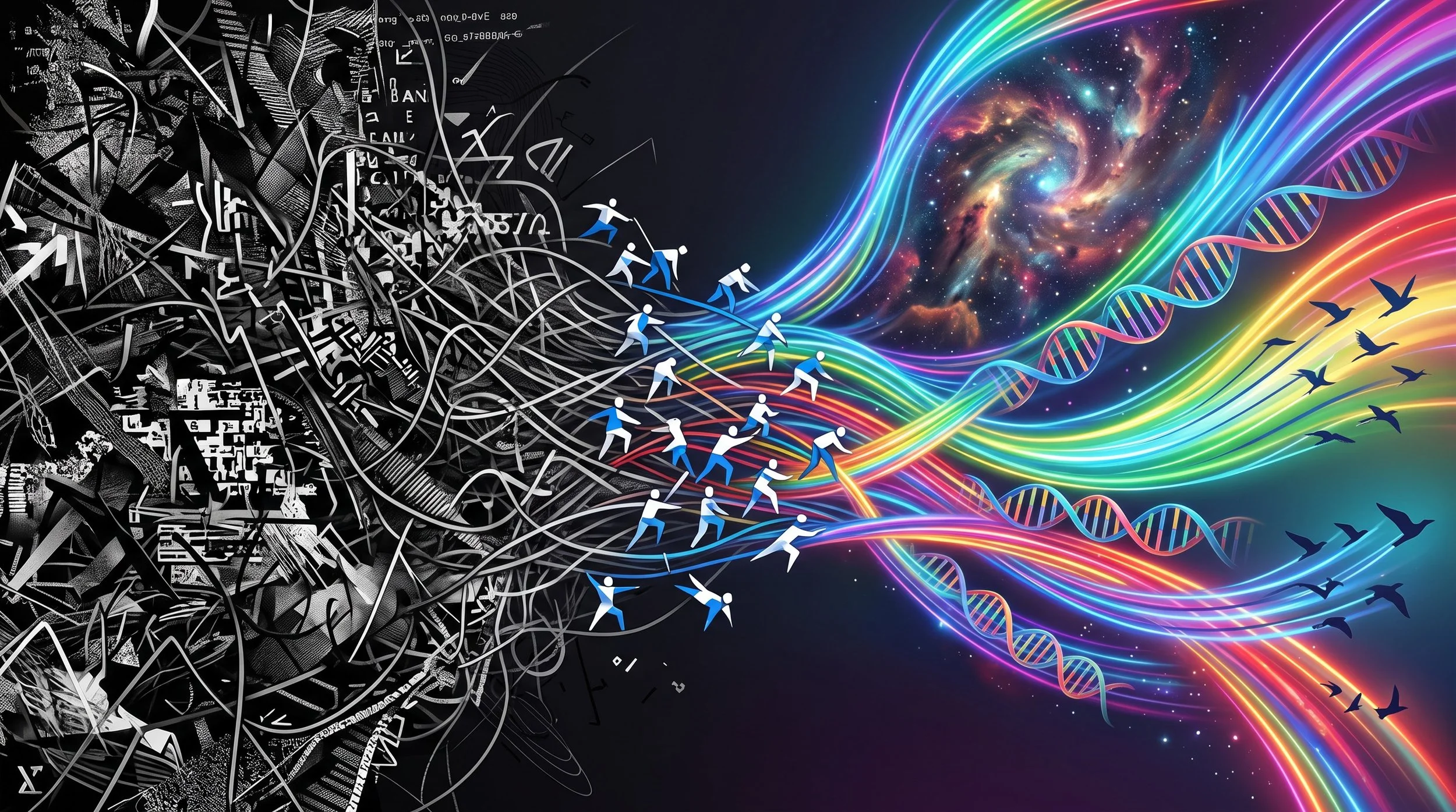
On a clear autumn evening, a schoolteacher in Ohio steps into her backyard with a smartphone and a portable telescope. With a few taps on an app, she aligns her lens with an obscure point in the constellation Cygnus. Across the ocean, a graphic designer in Lisbon is analyzing light curves on his laptop, looking for a tiny, periodic dip in brightness that signals a planet passing in front of a distant star. Together, alongside hundreds of thousands of volunteers worldwide, they map the heavens, log bird migrations, catalog rare flora, and track marine life in real time.
In our age of ultra-specialization, it is easy to assume scientific discovery belongs exclusively to high-tech laboratories, massive supercomputers, and elite, peer-reviewed institutions. Yet, the quiet revolution of modern "citizen science" tells a far more optimistic story. By picking up a phone to log a butterfly sighting or classify a distant galaxy, millions of everyday people are reclaiming an ancient, joyful human practice: pursuing wonder for its own sake.
This movement is not merely a modern quirk enabled by digital connectivity; it is the vibrant continuation of an enduring historical continuum. To truly understand why citizen science feels so deeply satisfying today, we must look back to the intellectual dawn of the Enlightenment—and a remarkable bridge built over a century ago. Long before science became a structured profession with rigid credentials, it was sustained by a global network of passionate "amateurs"—a word derived from the Latin amare, meaning "to love." In the 18th century, people shared a cultural adventure in the pursuit of knowledge. Consider Caroline Herschel, who began her astronomical career in the late 1700s assisting her brother William while working as a professional singer. Using small, hand-polished telescopes, she became the first woman to discover a comet and eventually cataloged hundreds of nebulae, expanding our map of the cosmos. Or consider the vast webs of correspondence maintained by figures like Carl Linnaeus, who relied on a network of apothecaries, sea captains, and curious gardeners to send him plant specimens from every corner of the earth.
During the Enlightenment, science took place in living rooms, back garden sheds, and local coffeehouses. An infectious conviction drove it: the universe was a coherent, beautiful puzzle, and anyone with patience, observation, and curiosity could help solve it. By the late 19th and early 20th centuries, however, science began moving indoors behind institutional doors. As telescopes grew larger and lab equipment more expensive, a divide emerged between professional scientists and everyday enthusiasts. Yet, the spirit of amateur contribution refused to dim.
In 1911, in Norwich, Connecticut, amateur astronomer and lawyer William Tyler Olcott met Edward Charles Pickering, the visionary director of the Harvard College Observatory. Pickering realized that professional observatories didn't have enough eyes or time to track "variable stars"—stars whose brightness fluctuates over time. Monitoring them required long-term, round-the-clock dedication across vast night skies. Together, they founded the American Association of Variable Star Observers (AAVSO). Olcott published open calls in magazines, urging casual stargazers with modest backyard telescopes to turn their eyes toward meaningful scientific service. The response was extraordinary. Bank clerks, teachers, doctors, and farmers began sending handwritten logbooks of stellar magnitudes to Harvard. Over more than a century, the AAVSO grew into an international powerhouse entirely by volunteers, collecting tens of millions of observation points that remain fundamental to modern astrophysics. The AAVSO proved a powerful thesis: given simple guidance and a shared purpose, ordinary people can generate data of extraordinary scientific value. I have felt this magic firsthand. Photometry data I gathered from my own setup eventually made it into three published astrophysics papers—contributing to research on cataclysmic variables, pulsating RR Lyrae stars, and accretion disk dynamics in erupting systems. Knowing that data collected in my own yard helped professional researchers answer fundamental questions about the cosmos is a feeling unlike any other:
What we are witnessing today with digital citizen science is not a break from modern technology, but the direct descendant of Olcott’s star charts and Linnaeus’s letter networks. Modern cloud computing, smartphone cameras, and crowdsourcing platforms have scaled the Enlightenment salon globally, turning every backyard into an observatory and every pocket into a laboratory.
Galaxy Zoo was launched in 2007. Facing a dataset of nearly one million galaxies imaged by the Sloan Digital Sky Survey, a team of astrophysicists realized it would take a single researcher several lifetimes to classify them all visually. They posted the images online and invited the public to help categorize galaxy shapes. Within hours, the website was receiving 70,000 classifications per hour. The initiative yielded millions of classifications in its first year alone and led to unexpected discoveries. Hanny van Arkel, a Dutch schoolteacher participating in Galaxy Zoo, spotted a strange, glowing green gas cloud that had no known explanation. Now officially known as Hanny's Voorwerp (Hanny's Object), this discovery opened an entirely new avenue of study regarding the energy outputs of supermassive black holes.
This democratization of discovery isn't limited to the sky; it's also transforming ecological and biological research on Earth. Platforms like iNaturalist—co-operated by the California Academy of Sciences and the National Geographic Society—let everyday hikers and gardeners upload photos of flora and fauna. Computer vision algorithms provide a preliminary identification, which a community of experts and enthusiasts then verifies. In 2019, an amateur naturalist in Los Angeles logged a photo of a small lizard on iNaturalist, which turned out to be a native species previously thought to have disappeared from the area. Similar observations on the platform have tracked the spread of invasive agricultural pests weeks before agricultural departments noticed them and mapped shifting wildflower bloom dates in response to microclimatic changes.
Beyond individual observations, crowdsourced data has enabled researchers to study macro-ecological patterns across entire continents over long periods.
eBird and the Audubon Christmas Bird Count: Building on the Audubon Society’s Christmas Bird Count—which began in 1900 as a peaceful alternative to holiday hunting—the Cornell Lab of Ornithology created eBird. One day, in late spring 2018, I looked out into my backyard and saw a bird on my feeder that I was sure I didn’t recognize. Using my cell phone camera and an old rifle scope I had lying around, I took a picture. I sent the picture to the owner of a shop that sells birding accessories. A short time later, he called me back. Several local birders wanted to come to my house for a chance to see the bird I had seen. Soon, four men with expensive cameras and long telephoto lenses sat in my backyard. Within the hour, they had the picture they wanted. This all happened in Galveston County, Texas, a short drive from the Gulf of Mexico. It is still the southernmost sighting in the continental US of the White-winged Crossbill (normally found in Alaska). This is how I found out about the apps eBird and Merlin Bird ID. Little did I know that, before this series of events, hundreds of thousands of birdwatchers log their sightings on mobile devices. This massive, real-time stream of observations has created high-resolution, animated migration maps for thousands of bird species, revealing precise travel corridors and stopping points that land conservation now prioritizes.
eShark and Reef Environmental Education Foundation (REEF): Beneath the ocean waves, recreational scuba divers and snorkelers participate in marine monitoring networks like REEF. By logging fish populations during standard dives, these volunteer "underwater naturalists" have created one of the largest marine life databases, helping marine biologists track the decline of invasive lionfish in the Caribbean and monitor the recovery of endangered Goliath grouper populations in Florida.
CoCoRaHS (Community Collaborative Rain, Hail and Snow Network): Started after a devastating flash flood in Colorado in 1997, this network relies on thousands of volunteers who measure precipitation in their backyards each morning using high-precision rain gauges. Their data feeds directly into the National Weather Service and river forecast centers, filling critical spatial gaps between official radar stations and improving real-time flood warning systems.
This return to participatory science is changing how we relate to the world around us. In an era often dominated by digital fatigue, screen burnout, and news-driven anxiety, citizen science offers a powerful, constructive antidote. It invites us to slow down, look closely, and engage directly with our immediate environment. It turns a routine morning walk through a local neighborhood park into an active expedition of discovery. The data these global networks gather is far from symbolic; it consistently leads to peer-reviewed research, protects endangered species habitats, and reveals new astronomical phenomena. Yet, the deepest impact may ultimately be human. When a teenager in Tokyo, a retired nurse in Manchester, and a high school teacher in Ohio contribute to the same dataset on atmospheric conditions or Monarch butterfly populations, they are linked by a shared sense of stewardship and curiosity that transcends geographical borders, political divides, and generational gaps.
History teaches us that humans have an innate, stubborn desire to understand the cosmos and their place within it. The tools in our hands have changed—from a brass spyglass and a quill pen to a digital sensor, cloud network, and touchscreen—but the underlying pulse remains unchanged. As we look up at the night sky or observe the natural world around us, we do what our ancestors have done for centuries: reach out, ask questions, and take joy in the simple act of finding out. By planting today’s technological capabilities in the timeless soil of human curiosity, citizen science proves that the great age of discovery isn't behind us. It is happening right now, in backyards and public parks everywhere, open to anyone willing to look up and wonder.