The Broken Clock
By Darrell Lee
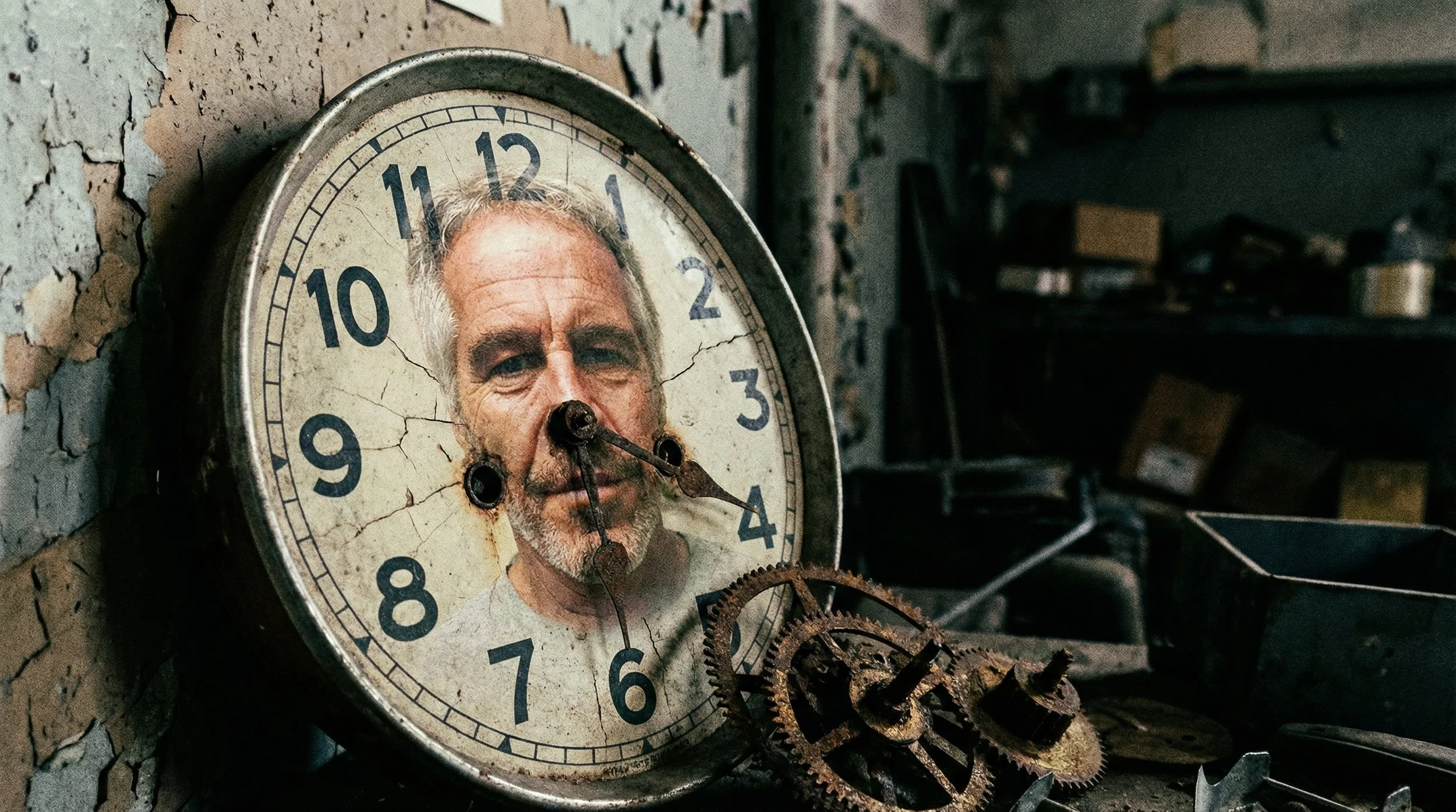
The old cliche— even a broken clock is right twice a day— feels more accurate than ever. On December 4, 2016, Edgar Welch, 28, drove from North Carolina to Washington, D.C., armed with an AR-15 rifle and a .38 revolver. At 3 PM, this deeply religious man with a strong protective instinct toward children, according to friends and family, entered Comet Ping Pong, a family restaurant, not to rob but because he believed he was on a rescue mission. As soon as he stepped through the door, he fired three shots into the ceiling and then leveled the barrel of the rifle at the owner, standing behind the counter.
For weeks before the incident, right-wing internet forums spread the sweeping, unfounded "Pizzagate" conspiracy theory. Supporters falsely alleged that coded messages in John Podesta’s hacked emails—which WikiLeaks published on October 7, 2016—unveiled a satanic child sex trafficking ring based in the restaurant’s nonexistent basement. Less than two months later, Welch’s three gunshots into the ceiling of Comet Ping Pong terrified patrons as he searched for captive children, but he found nothing. He surrendered to police, ending Pizzagate’s violent manifestation.
Yet after Welch’s arrest, the psychology behind Pizzagate did not disappear. It evolved, gaining potency and setting the stage for the next phase. This shift became clear on October 28, 2017, when an anonymous user known as "Q" published a cryptic 4chan post that launched QAnon. The online movement expanded Pizzagate into a sprawling narrative: a cabal of wealthy, Satan-worshipping elites ran a global child sex ring, and an impending "Storm" would bring mass arrests.
Mainstream media, sociologists, and political scientists spent years dismantling QAnon’s narrative, describing it as a dangerous delusion that fueled many events, the Capitol insurrection on January 6, 2021, being the most well-known. The conspiracy’s detailed stories—such as the "mole children" theory—were seen as utterly implausible. However, five years later, in January 2026, the Department of Justice unsealed over 3 million documents due to the Epstein Files Transparency Act. As data scientists and investigative journalists exposed the scale of Epstein’s network, the public saw that, separated from QAnon’s distortions, the central anxiety had a factual basis.
To understand QAnon followers' descent into conspiracy, examine the real conspiracy that the justice system overlooked for decades before QAnon arose. Epstein operated openly in high society, built unexplained wealth, and managed finances for billionaires, notably retail magnate Leslie Wexner. Beneath philanthropy and private jets was a well-organized apparatus for abusing minors.
A significant indictment of the American justice system occurred nearly two decades before the height of QAnon. In 2005, police in Palm Beach, Florida, initiated an investigation into Epstein after a parent reported the molestation of her fourteen-year-old daughter. Local authorities built a comprehensive case, identifying dozens of underage victims and securing warrants. Police raided Epstein’s mansion, and the FBI joined the investigation, drafting a 53-page federal indictment that could have resulted in Epstein’s lifelong imprisonment.
Instead, the system shielded itself. On June 30, 2008, Epstein pleaded guilty to two state prostitution charges: soliciting a prostitute and procuring a person under 18 for prostitution. This outcome resulted from an unprecedented Non-Prosecution Agreement (NPA) secretly negotiated by Alexander Acosta, then U.S. Attorney for the Southern District of Florida.
The 2008 deal exemplifies the corruption that drives public mistrust. Acosta’s agreement halted the federal investigation, provided immunity for other suspects, and kept records sealed. By withholding details of the deal from Epstein’s victims, Acosta violated the Crime Victims’ Rights Act. Epstein served only 18 months in a county jail, with the sheriff allowing him daytime work release and nights in an unlocked cell. Such protections for powerful individuals foster the conditions for conspiracy theories. The sense of a hidden cabal was not invented: in June 2008, Acosta’s actions gave it legal form.
When authorities arrested Epstein a second time on federal sex trafficking charges in July 2019, the sheer scale of his operation finally began to breach the dam that had kept information secret from the public for years. Following his death in a Manhattan jail cell on August 10, 2019, began the grueling work of mapping the network he left behind. This network exposes the true horror of the Epstein saga.
The website FlowingData is run by Nathan Yau, who has a PhD in statistics from UCLA. He advertises his website as “I want as many people as possible to understand data, and I think visualization — from statistical charts to infographics to data art — is the best way to get there.” An analysis by FlowingData mapped Jeffrey Epstein’s network utilizing a trove of 1.4 million emails. The data visualization paints a damning picture of a man who served as a central node in the global elite ecosystem.
The emails reveal an open, brightly lit social calendar. According to the data, a quarter of Epstein's top non-staff contacts possessed their own Wikipedia pages. He traded emails with at least 18 current or former billionaires, including Peter Thiel and Elon Musk (447 emails); celebrities such as Woody Allen and Deepak Chopra; and high-ranking political figures such as former Israeli Prime Minister Ehud Barak, Steve Bannon (1,974 emails), Larry Summers (4,294 emails), Kathryn Ruemmler, Former White House Counsel (11,265 emails) and emails with current U.S. Commerce Secretary and Trump ally Howard Lutnick that showed he coordinated a visit to Jeffrey Epstein’s private island for lunch. These documents have drawn scrutiny because they appear to contradict Lutnick’s previous claims that he cut ties with the convicted sex offender in 2005. For most of these high-profile contacts, the email exchanges were remarkably balanced, with Epstein sending and receiving roughly the same number of messages. A notable exception was Bill Gates. The data shows Epstein relentlessly emailed Gates but received few digital responses in return—though Gates did meet Epstein in person on several occasions. The Wall Street Journal reported that last month, Gates apologized to staff at the Gates Foundation. He said he had two affairs with Russian women, which Epstein later found out about, and in relation to the late financier, said: "I did nothing illicit. I saw nothing illicit." The newspaper, which said it had reviewed a recording of Gates's remarks, reported that Gates said images of him with women, whose faces are redacted, included in the Epstein files were pictures that Epstein asked him to take with his assistants after their meetings. The explanations stretch credibility to say the least.
Data analysis of specific name mentions within the cache, along with unsealed DOJ court documents, reveals that Epstein didn't just communicate with the elite; he traded on their names. The internet often refers to these unsealed documents as a "pedophile client list," but the legal reality is more complex and bureaucratic. The files actually represent the unmasking of over 150 "John and Jane Does" tied to a settled 2015 civil defamation lawsuit between the victim, Virginia Giuffre, and Ghislaine Maxwell. These unsealed files list individuals from various spheres of global power, revealing instances in which wrongdoing may have been hidden within innocent associations. Some figures face direct, serious allegations: Giuffre testified she was trafficked to Britain's Prince Andrew for sex, while witness Johanna Sjoberg stated in a deposition that Epstein once bragged that former President Bill Clinton "likes them young”, referring to girls. In contrast, names like Donald Trump or Michael Jackson appear only as passing references—such as Epstein casually mentioning he would call Trump before heading to a casino—indicating they were subjects of his networking, at least so far, rather than accused co-conspirators. The frequency with which world leaders, academics, and billionaires were discussed underscores how Epstein used proximity to power as a lure. By mixing criminal activity with regular celebrity networking, he built an aura of legitimacy and obscured the boundaries between his private actions and public persona.
The FlowingData analysis suggests that Epstein did not just know powerful people; he played a role in connecting them. He scheduled meetings, funded research, and flew influential figures on his private Boeing 727. A recent article in The Economist dissects the thousands of pages of court documents unsealed by the DOJ. These documents—stemming from a 2015 defamation lawsuit between victim Virginia Giuffre and Epstein’s primary accomplice, Ghislaine Maxwell—confirm that the elite class knew exactly who Epstein was and what he did. The Economist highlights the catastrophic failure of institutional accountability. The unsealed files do not just list names; they detail a logistical supply chain of abuse. Epstein employed schedulers, doctors, recruiters, and pilots who facilitated the trafficking of minors across international borders. Yet, for decades, university presidents gladly took his donations. Politicians gladly took his money. CEOs gladly took his meetings.
The tragedy revealed is that the global elite did not require a satanic ritual to ignore child abuse; they merely required a financial incentive and an introduction. They traded their moral obligations for access to Epstein’s vast capital and influential network. Why did Epstein spend millions of dollars flying powerful people to his private island, Little St. James, in the U.S. Virgin Islands? The answer lies in a grim concept familiar to intelligence agencies: Kompromat. Epstein did not just run a sex trafficking ring for his own gratification; he ran a blackmail factory. He weaponized human depravity to gain immense leverage over the world's most powerful people.
When the FBI raided Little St. James on August 12, 2019, they uncovered the physical architecture of this blackmail operation. Court documents, victim testimonies, and law enforcement leaks confirmed a terrifying rumor: Epstein had wired his properties with covert surveillance equipment. Investigators found hidden cameras concealed inside clocks, smoke detectors, and bathroom mirrors. Epstein explicitly designed the massage rooms and bedrooms on his island, as well as in his Manhattan townhouse and Palm Beach mansion, to secretly record his guests.
Virginia Giuffre and other victims testified that Epstein directed them to engage in sexual acts with prominent politicians, foreign royalty, and financial executives. By secretly recording these encounters with underage girls, Epstein gathered the ultimate insurance policy. He could destroy the lives, careers, and legacies of almost anyone in his social circle.
This sophisticated blackmail operation lends serious credibility to the persistent reports of Epstein’s ties to global intelligence agencies. When journalists questioned Alexander Acosta during his confirmation hearings for Secretary of Labor in 2017 about why he offered Epstein the unprecedented 2008 sweetheart deal, Acosta reportedly stated that he was told Epstein "belonged to intelligence" and that the case was "above his pay grade."
Investigative journalists and authors Gordon Thomas and Martin Dillon (who wrote the book Robert Maxwell, Israel's Superspy) have presented substantial evidence that Ghislaine Maxwell’s father worked as a major asset and operative for Mossad for many years. His connections were so highly regarded by the Israeli government that upon his mysterious death in 1991, he was given what amounted to a quasi-state funeral on the Mount of Olives in Jerusalem. The funeral was attended by the Israeli Prime Minister, the President, and no fewer than six current and former heads of Israeli intelligence.
These well-documented intelligence ties of her father are frequently cited by analysts and journalists when examining the suspected intelligence connections of Jeffrey Epstein and Ghislaine Maxwell. While the definitive nature of Epstein’s intelligence ties remains murky, the mechanics of his operation mirror classic state-sponsored espionage. Whether he gathered Kompromat on behalf of the CIA, Mossad, or simply as a private intelligence broker acting for his own personal gain, the outcome remains the same. He constructed an elite honey-trap. He utilized the leverage to secure favorable financial deals, avoid prosecution, and make himself utterly indispensable—and untethered from the laws that govern ordinary citizens.
If we accept these murky but distinctly possible ties to intelligence agencies, a darker hypothesis emerges: the intelligence community likely knew about Epstein’s blackmail operations involving underage girls for years, but allowed them to continue. Why stop a privately funded, highly effective intelligence-gathering honeypot? Epstein was collecting compromising material on global political and business leaders, both friend and foe, and that kompromat was undoubtedly valuable to state-sponsored actors. This possibility might also explain why, even after the massive 2026 document dump, the release of Epstein-related information still feels carefully curated and incomplete. Revealing that U.S. government and intelligence officials knowingly tolerated a sprawling child sex trafficking ring for geopolitical leverage would not just be a scandal; it would be a political bomb capable of destroying whatever institutional trust remains among the American public.
We must now return to Edgar Welch, standing in Comet Ping Pong on that December day in 2016. He and the thousands of QAnon followers who came after him looked at the world and sensed a sickness. They recognized that the systems designed to protect the vulnerable had failed. They recognized that wealth and power operated by a different set of rules. Their diagnosis of the symptom was correct; their diagnosis of the disease was pure delusion.
Personally, I would prefer the QAnon movement’s comic-book villain narrative because the reality of the Epstein case is too depressing to bear. In the QAnon mythology, a secret team of military intelligence officers (led by the anonymous "Q") worked behind the scenes to arrest the pedophile cabal. The myth provided hope. It provided a narrative where good eventually triumphs over cartoonish evil.
The Jeffrey Epstein files offer no such comfort. The documents unsealed by the DOJ, the network mapped by FlowingData, investigative articles by The Economist, PBS, The Atlantic, The Wall Street Journal, The New York Times, and many more tell a story of complete institutional failure. You, dear reader, don’t need to read all these articles, all brilliant and thorough and immensely depressing. I have done it for you, I have condensed the information and given it a structure, but I can’t make it any less tragic. There was no secret military tribunal waiting to save the victims. The FBI knew about Epstein in 2005 and let him walk. The Southern District of Florida protected him. The Ivy League academics took his money. The British Royal Family invited him to their estates. The mainstream media ignored the story for a decade.
The wealthy elites did not gather in the basement of a Washington, D.C., pizza parlor to conduct satanic rituals. They gathered in the brightly lit ballrooms of Manhattan, the private beaches of Little St. James, and the boardroom suites of global banks. They did not speak in bizarre, coded emails about cheese pizza; they communicated directly, casually scheduling massages, weekends at an island, and transferring millions of dollars through the financial institutions of JPMorgan Chase and Deutsche Bank.
The conspiracy movement was laughable when it claimed that politicians drink the blood of children to achieve immortality. It was laughable when it claimed that John F. Kennedy Jr. is still alive and returning to reinstate Donald Trump, only to turn out he didn’t need to anyway. But what wasn’t funny was that the core tenet of QAnon, that a secret cabal was actively harming children, repeatedly motivated individuals to take vigilante justice into their own hands. Two years after “Pizzagate”, in 2018, a heavily armed man blocked traffic on the Hoover Dam bridge in an armored truck, demanding the release of a DOJ report central to QAnon lore. In 2019, a radicalized follower murdered a reputed New York crime boss, believing the victim was a prominent member of the "Deep State." During the early days of the COVID-19 pandemic, an engineer intentionally derailed a speeding freight train in an attempt to crash it into the USNS Mercy hospital ship, citing QAnon-adjacent fears of a government child trafficking plot. The movement even spilled across borders, heavily infiltrating Germany's anti-lockdown protests and culminating in a 2020 attempt by right-wing extremists to storm the Reichstag. Most tragically, the delusion tore families apart at the domestic level, leading to numerous documented cases of radicalized parents kidnapping or even murdering their own children to "save" them from the imagined cabal. The conspiracy movement, still alive today, is a dangerous, toxic internet phenomenon that has ruined families, fueled domestic terrorism, and eroded objective truth.
But history is a ruthless judge, and it operates with cruel irony. When historians look back at the hysterical panic of the late 2010s and early 2020s, they will note the tragic alignment between the delusion of this quirky conspiracy movement and the depravity of the social elites. The public, driven mad by institutional decay, the isolating algorithms of social media, and the COVID lockdown, invented a massive, elite-run, global child sex trafficking ring that operated above the law.
They were right.
Jeffrey Epstein built exactly what QAnon feared. He built an island equipped with hidden cameras to blackmail the rulers of the free world. He trafficked minors across borders with impunity. He used intelligence-agency tactics for personal gain, and when the justice system finally caught him, it failed to deliver the justice that it claims to dispense without favor or fear. Allowing him years more of blackmail and criminal sexual abuse, destroying or damaging the lives of a lot of young girls.
The release of documents regarding Jeffrey Epstein has triggered a wave of high-profile resignations, with reports identifying 17 leaders across finance, politics, and academia who have resigned or lost their jobs as of early March 2026. The fallout includes CEOs, legal professionals, and political figures. The list is impressive: Thomas Pritzker (Hyatt Hotels), Kathryn Ruemmler (Goldman Sachs), Brad Karp (Paul Weiss), Sultan Ahmed bin Sulayem (DP World), and Casey Wasserman (Wasserman Media Group), Former Harvard president Larry Summers, Joanna Rubinstein (Sweden for UNHCR), David A. Ross (School of Visual Arts), Joichi Ito, and scientist Richard Axel, and the list goes on. Former U.S. Secretary of Labor and U.S. Attorney Alexander Acosta is now involved in private business, having joined the board of Newsmax. He has also been participating in congressional inquiries regarding the 2008 Jeffrey Epstein plea deal, testifying before the House Oversight Committee in September 2025. But only three people have been criminally charged, continuing the pattern of the well-connected avoiding punishment and going on with their lives relatively unscathed for their debased decisions regarding Epstein. All of them are unlike poor deluded Edgar Welch, who has a moral compass and his heart was in the right place, but he spent 4 years in prison.
The broken clock of online conspiracy theories struck the correct time, not through predictive genius, but through a tragic convergence of paranoia and elite reality. We do not need an inside mole known as “Q,” a top-notch cryptographer, or even a secret decoder ring from a crackerjack box to understand this kind of corruption. We only need to read the unsealed files, look at the emails, and accept the horrifying truth: the elite spend a lot of their wealth to separate themselves from the common folk, it isn’t just because they think they are better, many of the elite who look down their nose at the world are monsters, and they stay hidden so they can operate in broad daylight.
The very last email received by Epstein’s account, hence the very first at the top of the heap, arrived three days after his death, from someone called Cody Rudland; the identity of this individual, like many things in Epstein’s world, remains a mystery. “You are dead,” reads the subject. The body of the email simply said: “Lol good riddance.”
Darrell Lee is the founder and editor of The Long Views, he has written two science fiction novels exploring themes of technological influence, science and religion, historical patterns, and the future of society. His essays draw on these long-standing interests and apply a similar analytical lens to politics, literature, art, culture, and historical events. After retiring from a 36-year career as a software and systems engineer on the Space Shuttle and then the Space Station programs, he now splits his time between rural east Texas and Florida’s west coast, where he spends his days performing variable star photometry, dabbling in astrophotography, hunting, thinking, napping, fishing, scuba diving, and writing, not necessarily in that order. He is a member of the American Astronomical Society, American Radio Relay League, and the American Association of Variable Star Observers..