The Month of Rupture
By Darrell Lee
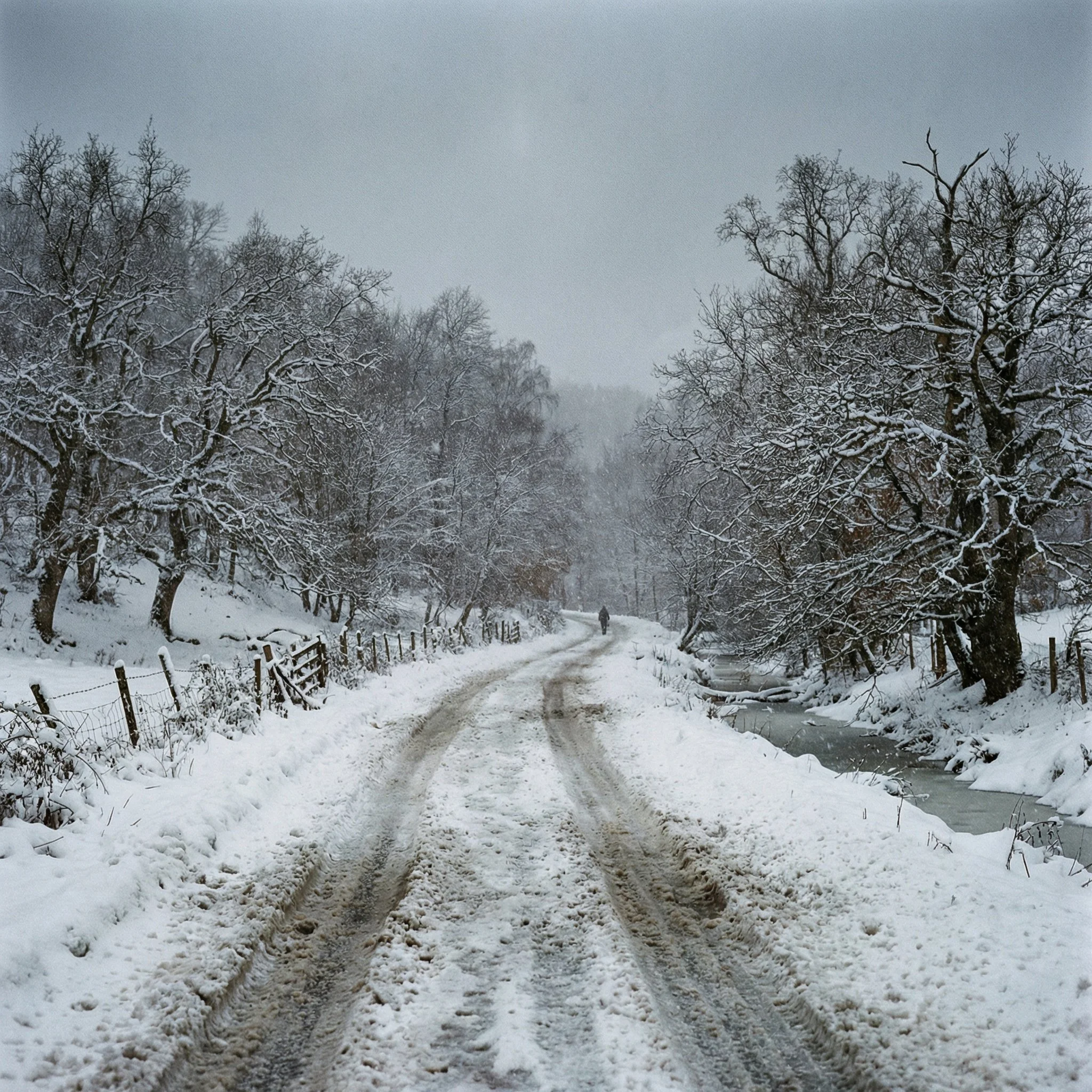
February is the calendar’s dead zone. It sits deep in the jaws of winter, a time when the festivities of the new year have faded into gray slush, and the promise of spring feels like a cruel rumor. It is a purgatory of endurance, where the world feels locked in place. Yet, precisely because the world is frozen and brittle, it is in February that history often snaps. Let's look back, and we will see that some of the most important ruptures in politics, science, and culture did not wait for the sun; they occurred in the dark, breaking the ice of the status quo.
Fifty-four years ago, in the dead of the Cold War winter, President Richard Nixon attempted a massive thaw. On February 21, 1972, Air Force One descended through the gray skies of Beijing. This "week that changed the world" was a calculated maneuver to break the ice of a bipolar world. The United States, weary from Vietnam and frozen in a nuclear standoff with the Soviet Union, chose to redraw the geometry of global power. By shaking hands with Chairman Mao Zedong, Nixon bet that economic warmth could melt ideological permafrost. The logic was clear: integration would act as a radiator, eventually bringing the East in from the cold. He couldn’t have been more wrong.
Fast forward to February 2014, and we witness the return of the freeze. The rupture began with fire in Kyiv's Independence Square, where the Maidan Revolution reached its bloody climax between February 18 and 23, overthrowing a pro-Russian government. Taking advantage of the chaos, on February 27, 2014, amidst the bitter winds of the Crimean peninsula, unmarked Russian special forces seized the parliament building in Simferopol. It marked the opening move of a conflict that would fester for eight winters until February 24, 2022, when Russian tanks crossed the border in a full-scale invasion of Ukraine. If Nixon’s visit was an attempt to bridge the gap between worlds, Putin’s invasion was a declaration that the gap had become a trench.
China’s economic thaw didn’t bring it closer to the West, but to Russia, its enemy, aiding and abetting the next big freeze. The proof lies in the timing. On February 4, 2022—just twenty days before Russian tanks rolled into Ukraine—President Xi Jinping and Vladimir Putin met in Beijing to declare a "no limits" partnership. In the freezing years that followed, while Western sanctions attempted to starve the Russian war machine, Chinese dual-use technology, semiconductors, and drone components flooded across the border to keep it fed. The industrial engine that Nixon helped ignite in 1972 is now, half a century later, the primary economic lifeline sustaining the invasion of Europe. The contrast between the shivering optimism of 1972 and the cold land grab of 2022 is the story of the "liberal international order" freezing to death. Nixon’s gamble was rooted in a belief that spring was inevitable—that nations would naturally gravitate toward the warmth of mutual interest. The events of February 2014 and 2022 proved that winter can last forever. Putin’s move in Crimea shattered the post-Cold War consensus that borders were immutable. While Nixon sought to insulate the world through trade, Putin contends that in the geopolitical winter, energy and territory are the only things that keep a nation warm. We are now living in the drafty aftermath, realizing that the "end of history" was just a brief warm spell.
Science is often a lonely vigil in the dark, and nowhere is this more accurate than in the discoveries of February. On February 18, 1930, a young astronomer named Clyde Tombaugh sat shivering in an unheated dome at the Lowell Observatory in Arizona. Staring at photographic plates, he spotted a shifting speck of light against the frozen backdrop of the stars. He had discovered Pluto. It was a triumph of the cold stare—using optical persistence to find a rock at the frozen edge of the solar system. Tombaugh found matter in the dark. Skip ahead to February 11, 2016. The scientists at LIGO announced they had detected gravitational waves—ripples in the fabric of spacetime itself. These waves were born from the collision of two black holes 1.3 billion light-years away, an event so violent yet so distant that it arrived at Earth as a mere shiver.
The difference between discovering Pluto and detecting gravitational waves is the difference between seeing an iceberg and feeling the ocean tremble. Tombaugh’s 1930 discovery was tangible; he found a frozen object in a frozen sky. It was the culmination of a mechanical age where we cataloged the "furniture" of the universe. The 2016 announcement was abstract and sensory. We didn't see an object; we felt the universe shiver. The detection of gravitational waves confirmed that the cold vacuum of space is not empty or still; it is a fabric that stretches, warps, and vibrates. The scale of isolation changed. Tombaugh worked alone in the cold. The LIGO detection required the collective warmth of thousands of scientists and billions of dollars. The trajectory from 1930 to 2016 moves from the solitary watchman in the tower to a global network listening for the heartbeat of the cosmos.
On February 2, 1922, in the damp chill of a Paris winter, Sylvia Beach published James Joyce’s Ulysses. It was a literary bomb that matched the season's introspection. Joyce took the epic structure of Homer and trapped it inside the frozen day-to-day of Dublin. He broke the "camera" of storytelling and moved the narrative into the claustrophobic heat of the mind. Ulysses argued that even on a gray, banal day, the human consciousness burns with a chaotic, fragmented fire. Fifty years later, on February 8, 1976, Martin Scorsese released Taxi Driver. The film is a portrait of a man freezing to death from the inside out. Travis Bickle drives his yellow metal box through the steam and slush of a New York winter, isolated by glass and psychosis. If Joyce showed us the chaotic interior of a sane man, Taxi Driver showed us the rotting interior of a lonely one. It captured the "fridge month" of the soul—the urban alienation that makes a crowded city feel like a tundra.
Then, on February 6, 2014—just weeks before Europe fractured in Crimea—Wes Anderson premiered The Grand Budapest Hotel. While the real world was marching toward war, culture retreated into a stylized, nostalgic fortress. The film tells the story of a concierge trying to maintain "faint glimmers of civilization in this barbaric slaughterhouse." Unlike Joyce’s exploration of the messy mind or Scorsese’s immersion in urban decay, Anderson offered a retreat. He built a diorama of pinks and purples, a perfect, artificial world standing against a snowy, fascist backdrop. The arc from 1922 to 1976 to 2014 is a study in coping mechanisms. Ulysses found heat in the friction of the mind; Taxi Driver showed that heat turning into a fever; The Grand Budapest Hotel suggested that when the world freezes over, our only defense is to wrap ourselves in the warmth of myth and manners.
February is a cruel month. It dangles us between the exhaustion of winter and the hesitation of spring. When we look at February 1922, we see a writer trapping the heat of the human mind on a cold page. When we look back at February 1930, we see a man shivering in the dark, finding a planet at the edge of the void. When we look at February 1972, we see a President flying through the gray to thaw a frozen world. Today, we stand in the slush of these legacies. The geopolitical thaw of 1972 has refrozen into the ice of 2014, thickening into the glacier of the 2022 invasion of Ukraine. The solitary science of 1930 has evolved into the colossal listening of 2016. And the narrative of the isolated man in the taxi has shifted to the concierge maintaining manners amid the slaughter.
The lesson of these Februarys is that vital work is done when the weather is at its worst. History does not wait for the flowers to bloom. We endure the fridge month not by sleeping through it, but by reshaping the world, and ourselves in the dark, waiting for the sun to catch up to what we have already done.
I am an essayist, award-winning author, and the founder of The Long Views. I bring a unique analytical rigor to my writing, informed by a 36-year career as a software and systems engineer for NASA's Space Shuttle and International Space Station programs. My essays and books consistently explore the intersections of technology, historical patterns, and the future of human society. I am an active member of the American Astronomical Society and the American Association of Variable Star Observers.